Last updated: 5 August 2026
Kyoto doesn’t have one “best” area to stay — it has six distinct ones, and picking the wrong one is the fastest way to spend your trip on trains instead of in the city. Kyoto Station area suits first-timers who want easy transit and luggage storage; Shijo-Kawaramachi and Shijo-Karasuma suit anyone who wants to eat and shop after dark; Gion and Higashiyama suit travelers chasing the postcard version of the city; Kyoto Gosho and Nijo Castle suit those who want quiet mornings within walking distance of the center; Ohara, Kurama, and Kibune suit slow travelers happy to trade convenience for onsen and forest quiet; and Saga, Arashiyama, and Takao suit early risers who want the bamboo groves before the buses arrive.
Most guides rank Kyoto hotels by star rating. That’s the wrong axis. Kyoto’s center is compact enough that almost anywhere gets you to the famous sights within an hour, but the feel of your mornings and evenings changes completely depending on which neighborhood you wake up in. A ryokan in Gion means slippers on tatami and geiko passing your window at dusk. A guesthouse near Kyoto Gosho means a quiet park walk before breakfast and a city that still feels lived-in rather than staged for visitors. Neither is more “authentic” than the other — they’re just different trips wearing the same city.
Quick Facts
- Kyoto’s central area spans roughly 20 km east-west and north-south, so most locations are reachable within an hour one-way
- Six areas cover most lodging choices: Kyoto Station, Shijo-Kawaramachi/Shijo-Karasuma, Gion/Higashiyama, Kyoto Gosho/Nijo Castle, Ohara/Kurama/Kibune, Saga/Arashiyama/Takao
- Book early for cherry blossom season, autumn foliage, Gion Matsuri (July), and around the Kyoto Marathon (mid-February) — these periods sell out fastest
- Kyoto’s accommodation tax was restructured starting 1 March 2026, with rates now tiered by room price rather than a flat range — factor this into your nightly budget when comparing stays
- Machiya rentals (private historic townhouses) and ryokan (staffed traditional inns) serve different needs: privacy and autonomy versus service and kaiseki dining
Kyoto Station Area: The Practical Base
Kyoto Station is where nearly everyone arrives first, and staying nearby solves more logistics than any other choice. JR lines fan out from here directly to Fushimi Inari, Tofuku-ji, and Arashiyama, and the station itself is stacked with coin lockers and luggage check-in counters — useful if you’re doing a day trip before your ryokan check-in elsewhere. Nearby temples like Toji, Higashi Hongan-ji, and Nishi Hongan-ji are an easy walk. The area leans toward large hotels and business hotels, which means vacancies are easier to find even during peak season, though the atmosphere is closer to “convenient” than “charming.” This is the right base if you’re arriving late, leaving early, or simply don’t want your accommodation search to become its own project.
Shijo-Kawaramachi and Shijo-Karasuma: Eating, Shopping, and the Kamo River
This pair of adjoining districts splits neatly: Shijo-Karasuma is Kyoto’s business district, Shijo-Kawaramachi its commercial and dining core. Both sit on the Karasuma subway line, a few minutes from Kyoto Station, and both put you within walking distance of Yasaka Shrine, Gion, and Nishiki Market. A morning walk along the Kamo River here is one of the simplest, least-planned pleasures in the city — locals jog and cycle along it before the day’s heat sets in. Lodging ranges widely, from traditional ryokan to guesthouses to designer hotels, which makes this a strong pick if dining and shopping matter as much to your trip as temples do.
Gion and Higashiyama: The Kyoto of Postcards
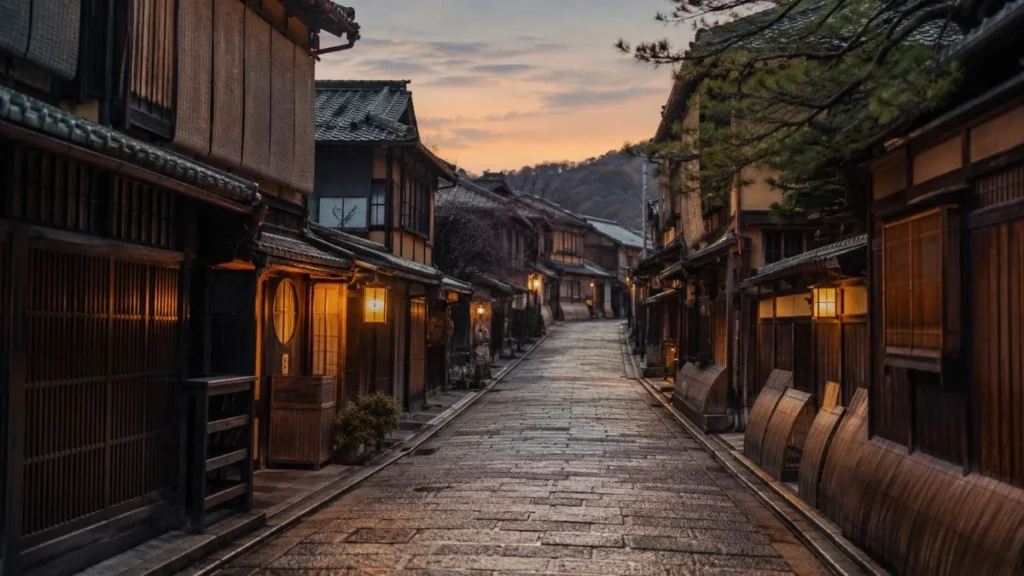
If you want lantern-lit lanes, wooden machiya facades, and walking access to Kiyomizu-dera, Yasaka Shrine, and Kodai-ji, this is the area. It’s also the most tourist-dense part of the city, particularly around Kiyomizu-dera’s approach roads during the day — arrive before 9am or after late afternoon if you want the quieter version locals actually recognize. Lodging here skews toward long-established ryokan and internationally run luxury hotels, which makes it a natural choice for a special-occasion stay rather than a budget base. Staying inside Gion also means you get the neighborhood at night, after the day-trip crowds have gone home — arguably the best reason to sleep here rather than just visit for an afternoon.
Kyoto Gosho and Nijo Castle: Quiet, Central, and Underused
This area sits closer to the middle of the city than its reputation suggests, and it’s noticeably calmer than Gion or Shijo. Nijo Castle and the Kyoto Imperial Palace park (Gosho) anchor it, and the hotels and guesthouses here tend to blend into the surrounding residential streets rather than announce themselves. A walk through Gosho park in the early morning, followed by breakfast at one of the neighborhood’s low-key cafés, is about as close as a first-time visitor gets to Kyoto’s actual daily rhythm. The Tozai subway line and JR Sagano line both run through here, so onward travel to Arashiyama or across the city stays easy.
Ohara, Kurama, and Kibune: Onsen, Forest, and Real Distance from the City
This is the area for travelers who’ve already seen Kyoto’s headline sights, or who simply want their trip to include a night that isn’t in the city center. Kurama-dera and Kifune Shrine sit tucked into green mountainside, and in summer, riverside kawadoko dining on wooden platforms over the Kibune River is a genuine local ritual, not a staged one. Ohara — home to Sanzen-in Temple — has minshuku and ryokan with hot spring baths, and it’s roughly an hour from Kyoto Station, which is the point: this is where you go to actually slow down rather than just read the phrase in a brochure. It won’t suit anyone trying to pack in maximum sightseeing per day, and that’s exactly the trade-off worth naming honestly.
Saga, Arashiyama, and Takao: Early Mornings Over Everything Else
Arashiyama’s bamboo grove and Togetsukyo Bridge are famous for a reason, and also famous for being packed with tour groups by mid-morning. Staying here — rather than day-tripping in — is the single best way to actually experience it, since the area empties out by early evening when restaurants and cafés close relatively early. Lodging includes high-quality hotels and long-standing hot spring ryokan, with good JR and Randen train access back into the busier parts of the city. Further out, Takao is genuinely quiet even by Kyoto standards: a mountain river valley with yuka dining on balcony seating and Jingo-ji Temple, best known as one of three classic autumn foliage viewing spots alongside Maki-no-o and Toga-no-o.
Machiya or Ryokan: Choosing the Right Kind of Traditional Stay
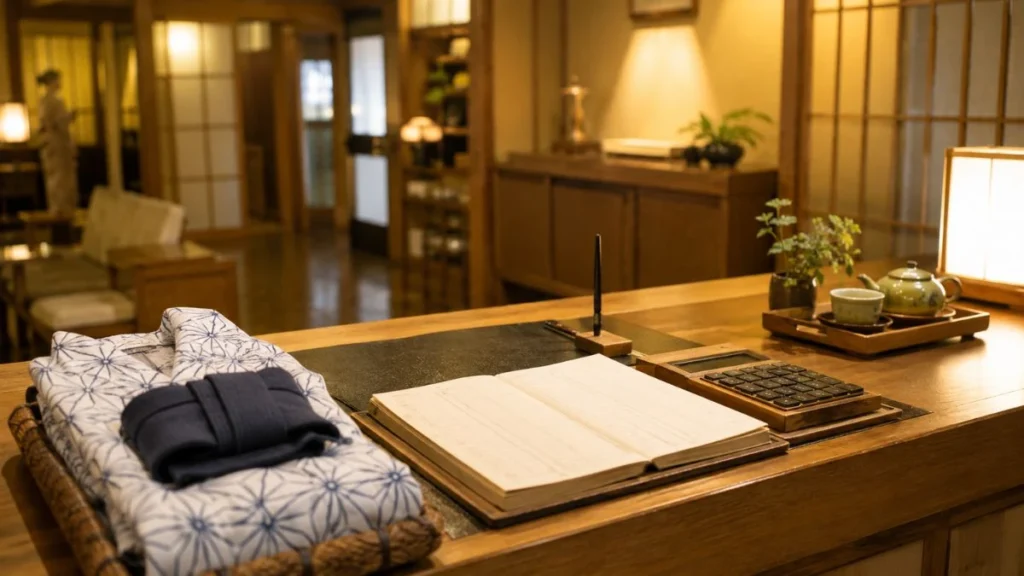
Both put you in a traditional wooden building, but they solve different problems. A ryokan means staff, kaiseki meals served in your room or a dining hall, yukata laid out for you, and communal or private onsen baths — you’re being looked after. A machiya rental means an entire historic townhouse to yourself or your group, usually with its own kitchen, washing machine, and a small inner garden — you’re on your own schedule, with more privacy and less built-in service. Neither is a lesser version of “real Kyoto”; they’re simply suited to different trips. A couple celebrating an anniversary usually wants a ryokan. A family staying five nights who wants to cook breakfast and do laundry usually wants a machiya.
Conclusion
The neighborhood you choose in Kyoto shapes your trip more than almost any single hotel review will tell you. Base yourself near Kyoto Station or Shijo if convenience and nightlife matter most; choose Gion or Higashiyama if you want to be inside the postcard after the day-trippers leave; pick Kyoto Gosho if you want central quiet; and head to Ohara, Kurama, Kibune, or Arashiyama if slowing down — not covering ground — is the actual goal of the trip. None of these are wrong choices. They’re just different answers to what you actually want your mornings in Kyoto to feel like.
FAQ
What’s the best area to stay in Kyoto for first-time visitors?
Kyoto Station or Shijo-Kawaramachi/Shijo-Karasuma are the most practical first choices — both offer easy transit connections, a wide range of lodging types, and walking access to major sights like Nishiki Market and Yasaka Shrine.
Is it worth staying in Gion instead of just visiting during the day?
Yes, if atmosphere matters to you — staying inside Gion means experiencing the neighborhood at dusk and after dark, once the day-trip crowds have left, which is a genuinely different experience from an afternoon visit.
Should I stay in Arashiyama to see the bamboo grove properly?
If seeing it without heavy crowds matters, staying overnight in Saga/Arashiyama lets you walk it at dawn before tour groups arrive — day-tripping in typically means seeing it at its most crowded, mid-morning through afternoon.
What’s the difference between a machiya and a ryokan?
A ryokan is a staffed traditional inn with meals, yukata, and often onsen bathing included — you’re taken care of. A machiya is a private historic townhouse rental with your own kitchen and space — you have more privacy and autonomy, less built-in service.
When should I book accommodation in Kyoto?
As early as possible for cherry blossom season, autumn foliage, and the Gion Matsuri festival in July, when many properties sell out. Lodging is easier to secure just before or after these peak windows, and on weekdays generally.
This connects to our guide on Kyoto’s 2026 Accommodation Tax, Explained, which breaks down exactly what you’ll pay per night depending on which of these areas and room tiers you choose.
Official Sources
- Choosing accommodation: Key features of each area — Kyoto Travel (Kyoto City Official Guide) (accessed 5 August 2026)